Senator Mike Rounds says "NO" to UFO gatekeeper-assassin theories

By Douglas Dean Johnson
@ddeanjohnson on X and Bluesky
This article was originally published on October 30, 2026, at 4:00 PM EDT. Any substantive additions, revisions or corrections made after initial publication will be recorded in a chronological log found at the end of the article.
If you are not currently receiving my new articles by email, you can sign up to do so by clicking on one of the "subscribe" buttons. There is no charge, and I will not put your email address on any other list.
My Gmail address is my full name– first.middle.last– with periods between the names.

Over the last several years, many of the people emerging into the public spotlight, claiming knowledge about ultra-secret government programs in possession of nonhuman craft and alien bodies, have also claimed that they or people they know have been threatened with violence if they do not drop plans to disclose big secrets.
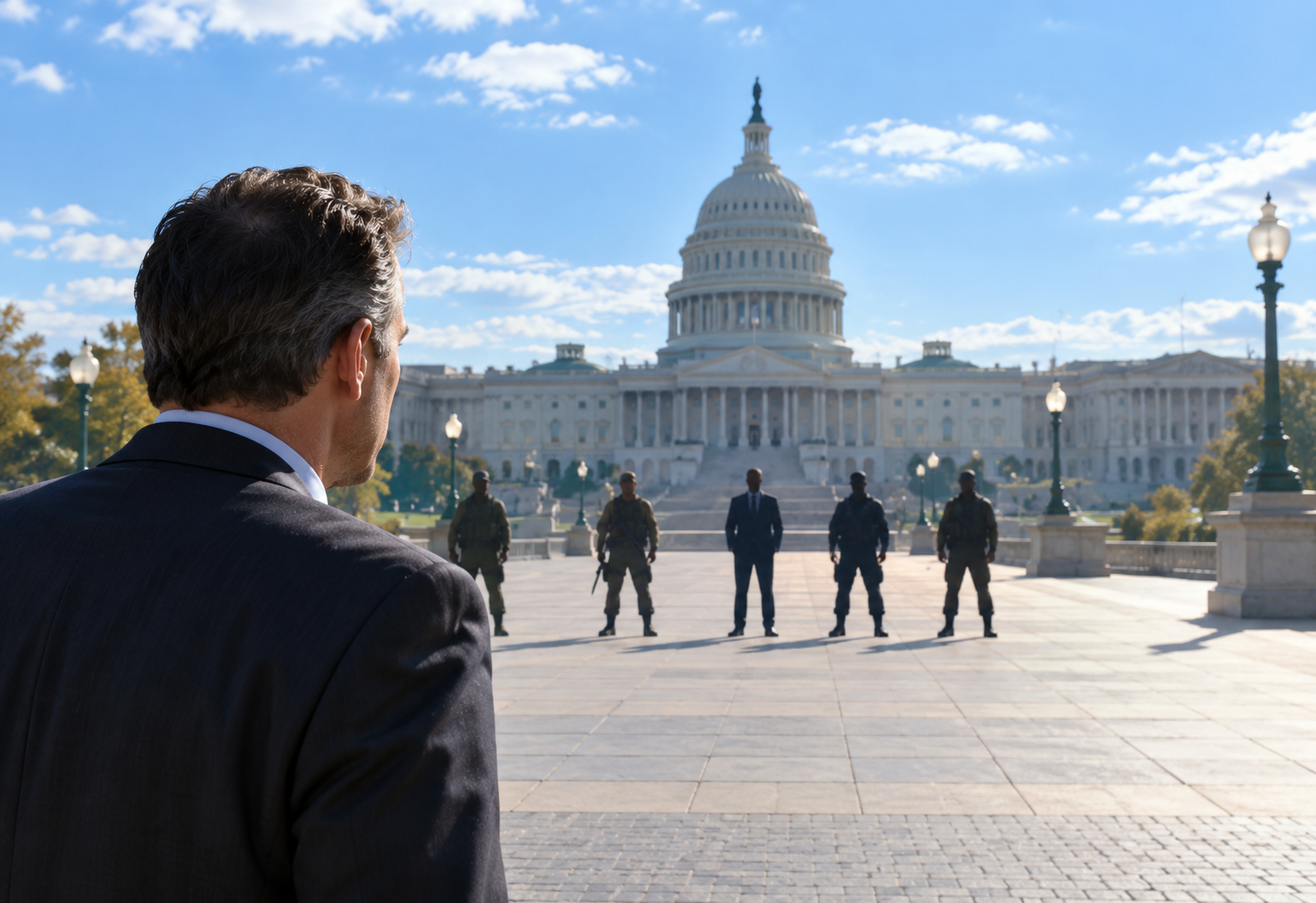
In multiple cases, these persons or others who amplify such stories have gone further: They have asserted that specific individuals may have been or were covertly murdered, or kidnapped and murdered, by unidentified "gatekeepers" within the government or government-affiliated contractors. In these tales, the victims were murdered because the victims were deemed to pose a threat to the secrecy of UFO reverse-engineering programs or other alien-associated secrets.
Variations on this theme--which for simplicity I will refer to here collectively as "gatekeeper-assassin stories"– seem to have become almost an obligatory element of narratives about purported ultra-secret UAP-alien programs, whether referred to as "the Legacy Program" or by other terms. Among the many narrators who have explicitly advanced gatekeeper-assassin claims over the past several years are David Grusch, Lou Elizondo, Jay Stratton, Dan Farah, Jake Barber, Matthew Brown, Michael Herrera, Pippa Malmgren, Danny Sheehan, Jeremy Corbell, Steven Greer, and Ross Coulthart.
I have paid quite a bit of attention to the details of many of these claims, and have spent considerable time looking into a few of the specific stories. To date, I personally have seen no substantial evidence that anyone ever has really been murdered, or even credibly threatened with death or grave bodily harm imposed either judicially or extrajudicially, on any matter related to UFOs or aliens (by any terminology).
I believe that some of the people transmitting such stories have consciously fabricated them, and may sometimes stage events to help convince others that the threats are real. Others appear to be afflicted with Main Character Syndrome and have melodramatically interpreted and exaggerated prosaic events and interpersonal or professional conflicts, adding a little extra spice to their stews of second-hand stories of captive alien technology. Other narrators are just repeating stories or "warnings" they heard, sometimes from well-meaning believers and sometimes from hoax-writers. Seldom has any gatekeeper-assassin claim been subjected to a documented professional investigatory process, or tested in an adversarial judicial process. Some of the popular stories collapse quickly even under a modicum of non-badged scrutiny. [1] [2]
I may go into detail on one or more of the currently popular gatekeeper-assassin tales in later articles. In this article, I will drill down on one somewhat unusual manifestation of this claim-set. This will necessarily entail, however, excursions into such matters as the Espionage Act, the constitutional and statutory definition of "treason," and the purported Air Force fake-alien enterprise known as "Yankee Blue."
THE SOL FOUNDATION CLAIM
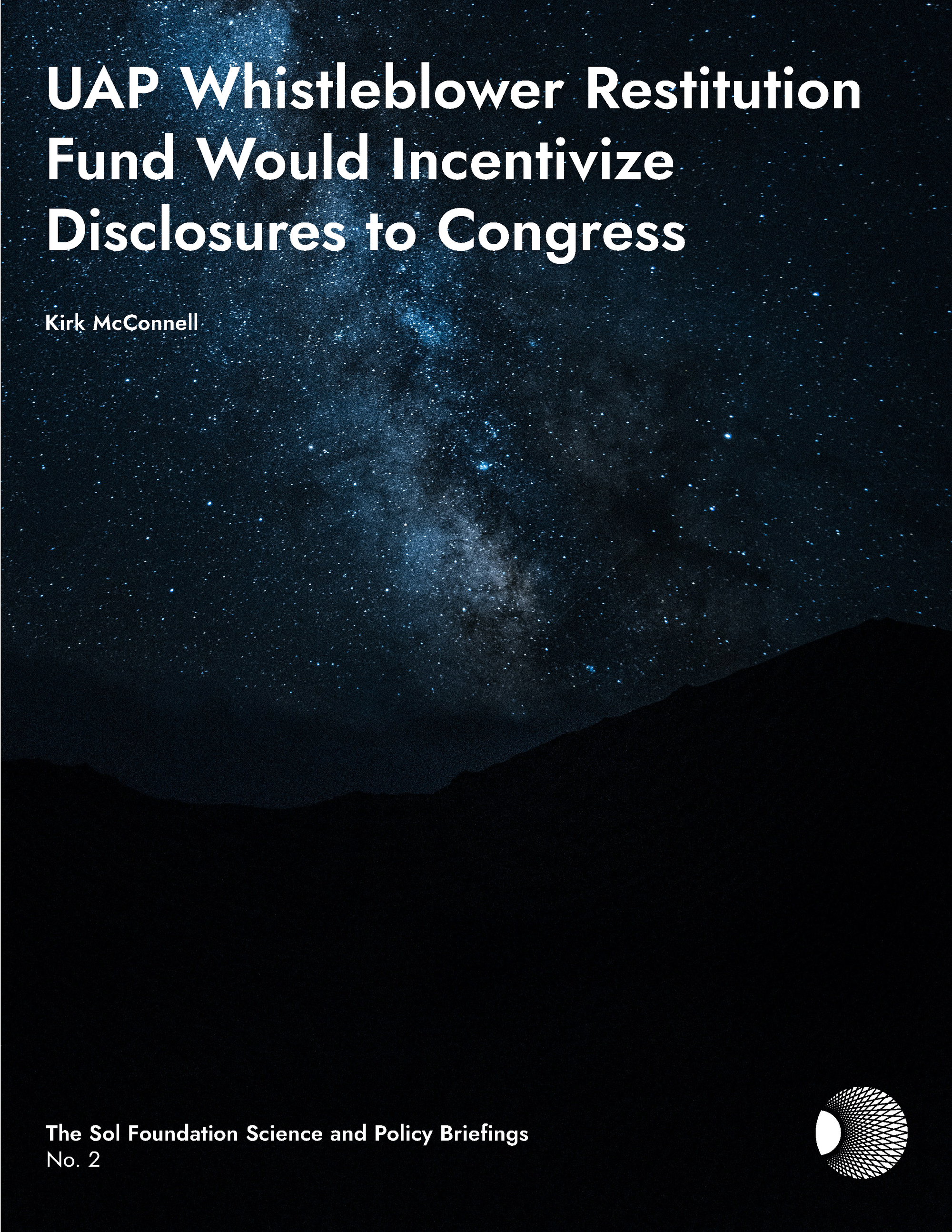
Some months ago, I downloaded and read a policy briefing paper published in April 2026 by a nonprofit UAP-disclosure organization, The Sol Foundation. The title is "UAP Whistleblower Restitution Fund Would Incentivize Disclosures to Congress." The paper was authored by Kirk McConnell, who retired in 2024 after 37 years in congressional staff positions, including important positions as a professional staff member for the Senate Armed Services Committee and the Senate Select Committee on Intelligence. It appears that the primary target audience for this particular publication is members of Congress and their staffs. The entire PDF of the briefing paper, as published and disseminated in April, 2026, is embedded at the link below.
On page 3 of the briefing paper, two sentences in the Executive Summary jumped out at me:
Individuals considering disclosing information regarding classified executive branch unidentified anomalous phenomena (UAP) programs to Congress potentially face significant acts of retaliation. As several prominent US senators have affirmed, such retaliation can include immediate loss of employment and livelihood; threats of prosecution; and, most alarmingly, direct risks to personal safety. [boldface added for emphasis]
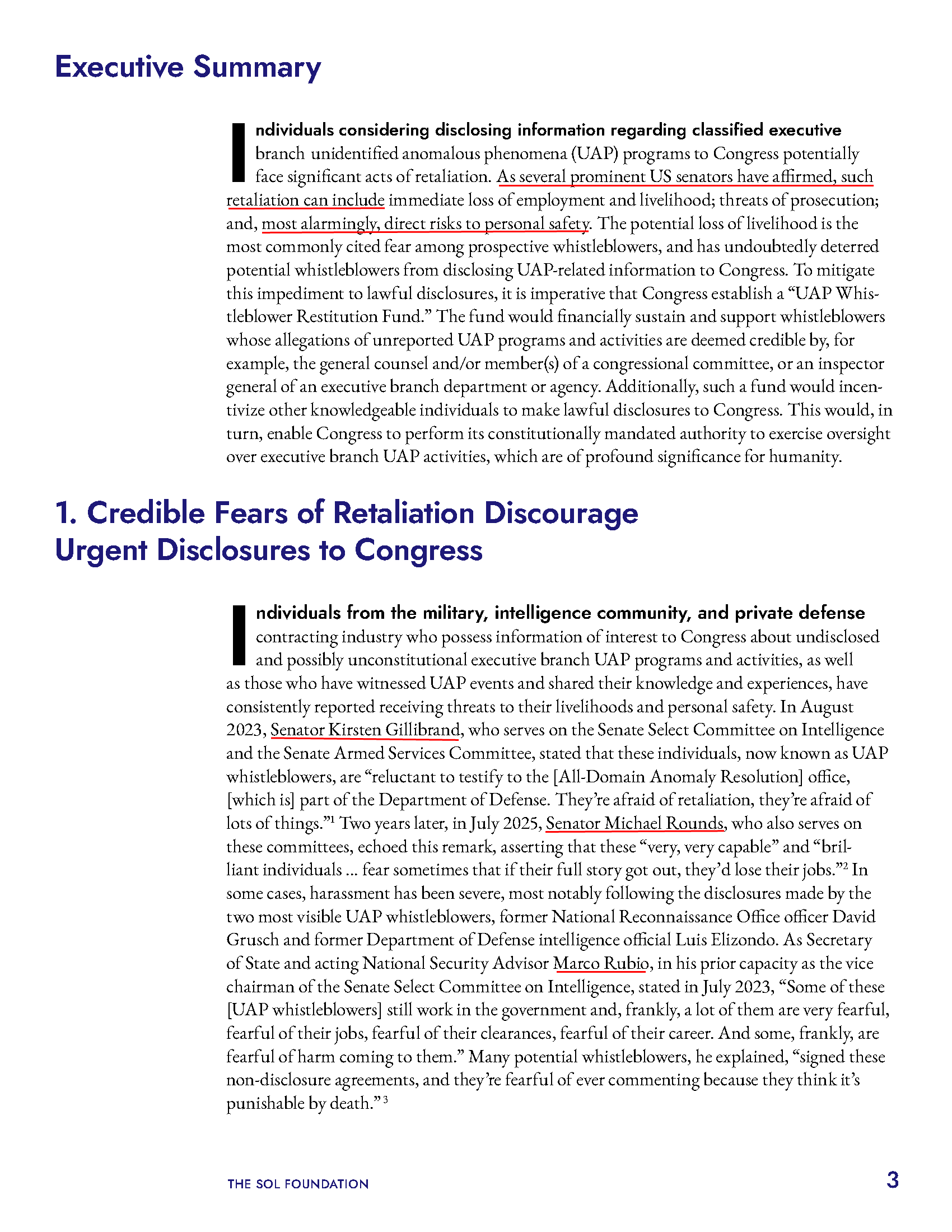
The assertion that "several prominent US senators have affirmed [that] such retaliation can include... most alarmingly, direct risks to personal safety," brought me up short. If indeed any prominent senators--perhaps privy to pertinent classified information– had concluded and affirmed that persons, by approaching or contemplating approaching Congress with information about secret UAP programs thereby opened themselves to genuine "direct risks to personal safety," then it seemed to me that a great many people– not least the senators themselves, and law enforcement agencies within the Executive Branch– ought to be operating in crisis mode to find and neutralize the agents responsible for such dangers. [3] [4]
And yet: I had been closely observing senatorial discourse regarding UAP for a number of years, studying every interview and passing public comment, and had spoken to several senators directly regarding UAP-related developments. I had never detected any undercurrent in word or demeanor (body language, if you will) to suggest that any of them thought they were grappling with a historic constitutional crisis of the sort that a home-grown, witness-intimidation-assassination cabal would pose.
One complicating factor in discussing this subject is that two very different forms of physical risk have been suggested, and they are sometimes conflated. Popular UFO lore is replete with claims of covert killing or death threats by gatekeeper-assassins – allegations of activity completely outside of the generally recognized legal order. But as quoted by the senators, would-be informants actually seemed to be most often concerned about being prosecuted and subjected to court-imposed capital punishment.
The reference in the Kirk McConnell/Sol briefing paper to "direct risks to personal safety" seemed clearly to refer to the first sort of risk--i.e., people operating outside of the law as we understand it– since he explicitly distinguished it from "threats of prosecution." But some of the statements that the senators attributed to their informants are much more ambiguous in this respect.
The first type of claim (covert assassinations) demands evidence. Fear based on the capital punishment scenario, in contrast, simply flies in the face of law, history, and common sense, as discussed below, and therefore I find it difficult to believe that any lawmaker, after having consulted competent legal counsel, would affirm that it is a valid concern.
With both of these types of hypothetical risks in mind, I went in search of senatorial affirmations that "direct risks to personal safety" are a real thing. I found none.
The Sol Foundation monograph quoted and/or cited specific statements made by three senators: Mike Rounds, Kirsten Gillibrand, and Marco Rubio. (Rubio left the Senate in January 2025 to become secretary of state; since May 1, 2025, he has also served as the President's national security advisor.) While serving on the Senate Select Committee on Intelligence, the Armed Services committee, or both, these three senators are all known to have spoken at times with unidentified informants who claimed UAP-related knowledge.
However, carefully examining the public record, as described below, I found no case in which any of the three named senators had expressed a personal belief that persons who wanted to come to Congress with UAP-related information thereby placed themselves at physical risk. Gillibrand and Rubio did describe fears expressed to them by unnamed persons, as detailed below, and I have no reason to doubt that unknown persons did express such fears to them. Moreover, I have no reason to doubt that for at least some of their informants, those fears were sincere and not feigned. But neither Gillibrand nor Rubio affirmed the claims were well founded. Regarding Senator Rounds, more below.
ASKING THE QUESTIONS
On October 5, 2026, I submitted an email to Peter Skafish, executive director of The Sol Foundation, summarizing my findings and observations essentially as set forth in this article. I concluded with a request for an on-the-record response, as follows:
If Kirk McConnell, or anybody else at The Sol Foundation, can point to any place that any member of the U.S. Senate has actually affirmed that potential informants in possession of purported UFO-related secrets open themselves to 'direct risks to personal safety,' please do so.
I was later able to confirm that Dr. Skafish had received my email. But as of the date of this publication, more than three weeks later, I have not received a response.
I also sought direct responses from all three senators, but regrettably, I have so far been unsuccessful in eliciting a direct response Gillibrand or Rubio. Senator Rounds graciously did reply and explicitly denied knowledge or belief that informants place their lives at risk, as detailed below.
As to Gillibrand and Rubio, I can only encourage the reader to read and view their pertinent statements in context, and then assess whether they would have spoken and acted as they have if they really believed that some group is sneaking around covertly assassinating potential UAP whistleblowers, or threatening to do so (or in the alternative, that such informants, coming to Congress, might thereby open themselves to being tried, convicted, and sentenced to death in a federal court).
MIKE ROUNDS
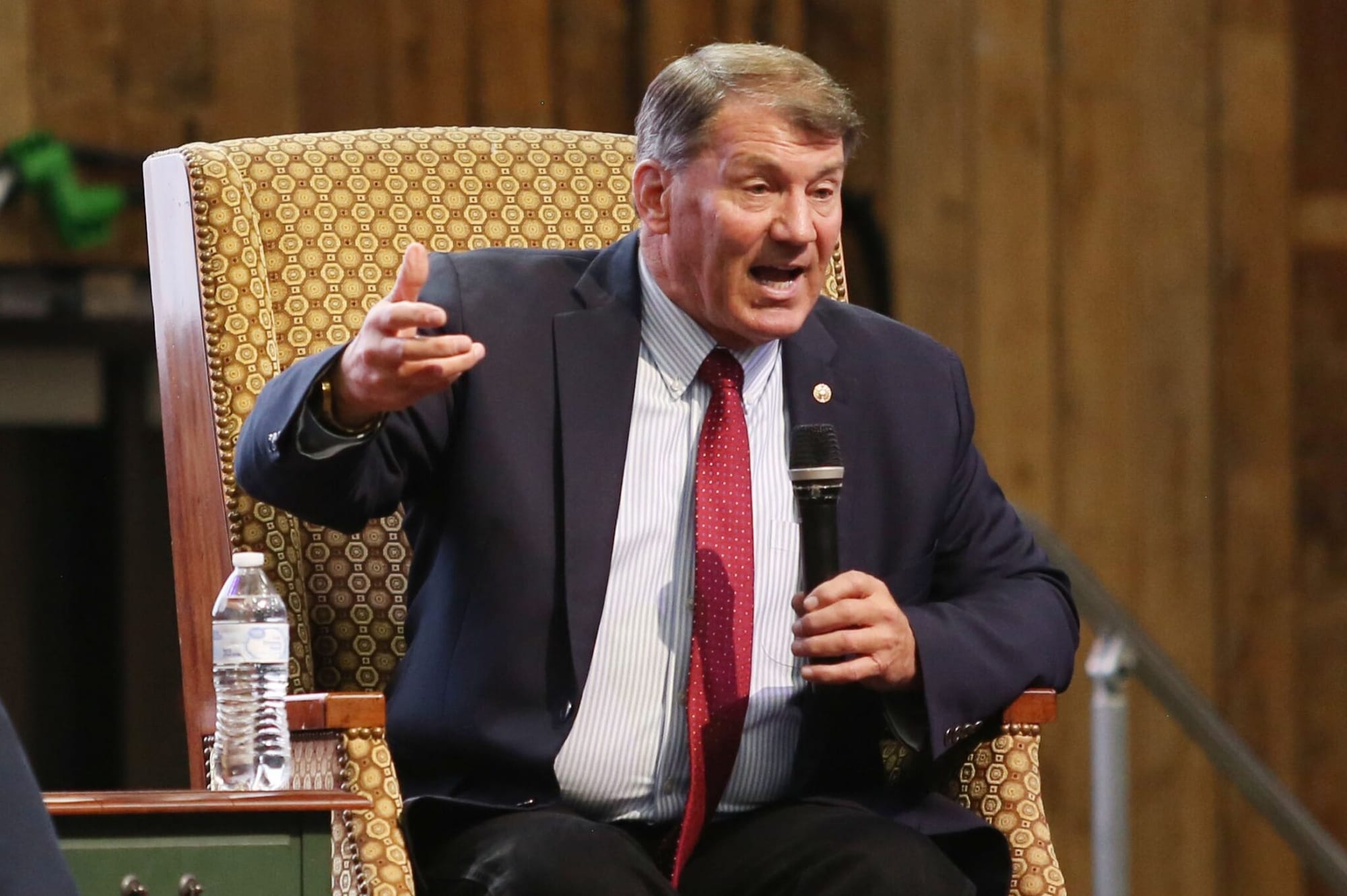
Senator Mike Rounds (R-SD) has been a member of the Senate Armed Services Committee since 2015, and a member of the Senate Select Committee on Intelligence since 2023. In July 2023, he joined Senator Chuck Schumer (D-NY), then the Senate Majority Leader, in introducing the UAP Disclosure Act, legislation that would create an "independent" temporary agency headed by a Senate-confirmed review board, empowered to search throughout the government, and elsewhere, for evidence of "nonhuman intelligence" and examples of "technologies of unknown origin," defined to include devices "incorporating science and technology that lacks prosaic attribution or known means of human manufacture."
I was able to have four specific written questions on this subject presented directly to Senator Rounds by a senior member of his staff, along with the Sol Foundation briefing paper and other contextual information. It was agreed in advance that all of Senator Rounds' responses would be on the record and published.
My questions, and Senator Rounds' answers, appear in full below. (His answers were transmitted to me via email on June 17, 2026.)
(1) Senator Rounds, have you personally ever heard a specific report or reports, from any individual inside or outside of government whom you regarded as credible, alleging that any specific person was murdered to prevent him or her from disclosing information about UAP/UFOs, or about purported secret government programs dealing with extraterrestrial or other "alien" or "non-human" technology?
Senator Rounds: NO.
(2) Have you ever personally affirmed or suggested that any person who might consider coming to Congress to disclose information that they believe is related to secret programs dealing with extraterrestrial or alien or non-human technology (or any other matters related to UAP/UFOs) might thereby incur direct risks to their personal safety from persons or organizations that seek to prevent such disclosures?
Senator Rounds: NO.
(3) Have any other members of the U.S. Senate ever suggested to you that they believe that would-be informants who wish to share information about UAP, or purported extraterrestrial or alien or non-human technology, might thereby subject themselves to direct risks to their personal safety from persons or organizations that seek to prevent such disclosures?
Senator Rounds: NO.
(4) Do you currently have any reason to believe that any person who may be considering sharing confidential information about programs purported to study extraterrestrial or alien or non-human technologies, or any other matters related to UAP/UFOs--whether sharing that information with Congress, AARO, federal inspectors general, or federal law enforcement agencies--has any real basis to fear that such reporting will place them at risk of violence or even murder at the hands of persons or organizations that seek to prevent such disclosures?
Senator Rounds: NO.
I should note that I was not the first person to ask Senator Rounds about allegations of this sort. On June 30, 2025, Ross Coulthart of NewsNation conducted an extended interview with Senator Rounds about UAP-related matters.
Coulthart asked whether Rounds would propose legislation to mandate FBI investigation of "allegations of murder that have been raised by whistleblowers--this is very serious allegations of capital crimes, federal crimes." Rounds answered, "I have not pursued that. This is honestly– I've never had that question be asked. I would probably stay away from those types of items of getting involved in telling law enforcement what they have to do. I have not found that to be part of any discussion that I've been involved with. So it's a brand new request that you're asking about today."
On June 30, 2025, Ross Coulthart of NewsNation asked Senator Mike Rounds (R-SD) whether he would consider adding language to legislation to require the FBI to look into gatekeeper-murder allegations. One-minute clip from 46-minute interview; Fair Use under 17 U.S. Code § 107 for noncommercial purposes of investigative journalism, scientific research and debate, education, commentary, and criticism.
KIRSTEN GILLIBRAND
Senator Kirsten Gillibrand (D-NY) has been a member of the Senate Armed Services Committee since 2011 and a member of the Senate Select Committee on Intelligence (SSCI) since 2021. Kirk McConnell's Sol Foundation briefing paper quoted from remarks by Senator Gillibrand in Glens Falls, NY, on August 6, 2023. On that occasion, Gillibrand said:
So far, whistleblowers have been reluctant to testify to the AARO office that's part of the Department of Defense. They're afraid of retaliation. They're afraid of lots of things, that they cannot come forward. So we made sure in the AARO provisions that it has a whistleblower protection. We made sure that if you signed a nondisclosure agreement, that you can come forward and share your testimony. But how many people saw "Oppenheimer" [the movie]? Okay, so "Oppenheimer" is about developing the bomb during World War II, and all those scientists who worked on that project had to sign nondisclosure agreements. And what I've heard about those nondisclosure agreements is that because it was wartime, it had provisions that said, including if you disclose, "under penalty of death." And so the big worry is that people who signed nondisclosure agreements to work on any type of program for the military, that it had language in there that made them think that that was true. So there's a lot of fear. And so I don't know if we'll ever get to the bottom of it. I don't know if we'll ever get the information about special access programs that are need-to-know only, that Congress is not read in on. I'm trying to get to the bottom of it.
Senator Kirsten Gillibrand (D-NY) spoke about fears of would-be "whistleblowers" about secret programs, in Glens Falls, New York, August 6, 2023. Excerpt from longer interview published by The Post-Star (Glens Falls, N.Y.) on August 14, 2023. Fair Use under 17 U.S. Code § 107 for noncommercial purposes of investigative journalism, education, commentary, and criticism.
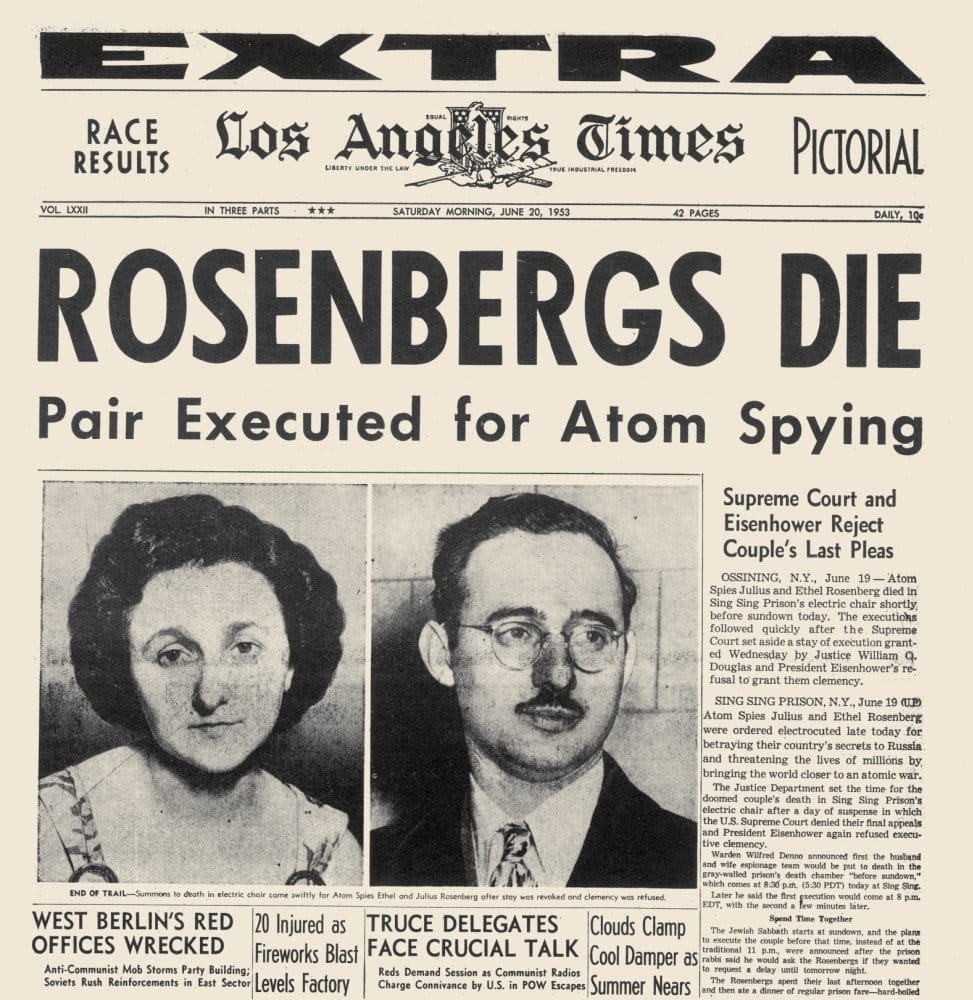
There is indeed a federal statute, part of the Espionage Act, that allows for the death penalty for a person who turns vital national defense information over to foreigners. The last people to be convicted and executed under the Espionage Act were Julius and Ethel Rosenberg in 1953; they had been convicted of playing a role in turning over atomic-bomb secrets to the Soviet Union.
However, the circumstances in which the death penalty might be imposed are so narrowly defined that they have no apparent application at all to scenarios in which a "whistleblower" would provide UAP-related classified information to Congress, designated Executive Branch agencies, or even unlawfully to the American public. (I discuss this further below.) Moreover, in recent months both the Pentagon and the Office of the Director of National Intelligence have issued directives making non-disclosure agreements inapplicable to UAP-related disclosures to the Pentagon's All-domain Anomaly Resolution Office (AARO) or to the Presidential Unsealing and Reporting System for UAP Encounters (PURSUE). [5]
Even if one assumes for the sake of discussion that (1) alien-derived technology is in government or government-affiliated hands, and (2) someone then released such information without authorization and it reached an adversary nation, and (3) this occurred under some future Administration inclined to clamp down hard to keep purported UFO/alien secrets under wraps, and so prosecuted the offender: Any prosecution would be an enormously publicized affair--hardly conducive to keeping a purported ultra-secret UAP "Legacy Program" hidden from view.
For these reasons, while I have no reason to doubt that one or more people who spoke to Gillibrand indeed expressed a fear of capital punishment, perhaps sincerely, that has no basis in reality, aliens or no aliens, and I see nothing in Gillibrand's words affirming the validity of such a fear. [6]
I also reviewed other interviews with Gillibrand, including one conducted by journalist Matt Laslo on October 9, 2025. On that occasion Gillibrand said that former AARO Director Sean Kirkpatrick "explained to me that, well, there was a lot of people who said they had to sign a non-disclosure agreement to work on aliens. And so they were told, ‘If you tell anybody, we’ll kill you.’ And so I believe that happened multiple times. And then the DOD’s answer was, ‘Oh, it was just a ruse. It was – we were trying...’--they said it was, like, hazing....So I was very mad about it when I heard this. But I never got clarity whether it really was hazing, or whether there is a program. Like, I don’t know which is true.”
It appears that Gillibrand was here relating her memory of the conversation in which Sean Kirkpatrick informed her of AARO's discovery of an Air Force practice called "Yankee Blue," which involved fooling newly minted Air Force intelligence officers by showing them material depicting a fake alien-tech program, accompanied by dire warnings. The hazy "Yankee Blue" affair is discussed in a separate section below.
The complete October 9, 2025 Laslo-Gillibrand exchange is accessible at this link in both audio and transcript form.
However one might interpret Gillibrand's remarks to Laslo, I do not see how they can fairly be construed as an affirmation that she thought that the military personnel involved were really placed in physical danger, and certainly not an affirmation that they might have been in danger of covert assassination.
On October 5, 2026, I emailed to two senior members of Gillibrand's staff a copy of the April 2026 Sol Foundation briefing paper, along with a set of questions similar to those I had presented to Senator Rounds, and a copy of his answers. Regrettably, I have received no response to the questions, but I may submit them again after publication of this article in case they have anything that they wish to add or dispute.
MARCO RUBIO
The specific Marco Rubio statements cited by Kirk McConnell on page 3 in the Sol Foundation briefing paper occurred during a June 26, 2023 interview with Joe Khalil of NewsNation. Speaking of unnamed government employees or former employees, Senator Rubio said his informants "signed these non-disclosure agreements, and they're fearful of ever commenting because they think it's punishable by death."
Senator Marco Rubio (R-FL) was interviewed by Joe Khalil of NewsNation, June 26, 2023. Here he speaks of unnamed persons being fearful that violation of a non-disclosure agreement is "punishable by death" (it is not, without much more), "so we passed a law."
Several minutes later, Rubio remarked, "And some, frankly, are fearful of harm coming to them." Rubio here again is repeating what people had said to him. Rubio did not explicitly or implicitly convey a belief that his informants were actually at risk of physical harm; indeed, he repeatedly stated that he did not know whether any of their stories were true, although he found at least some of his informants to be persons not lightly dismissed.
During the June 26, 2023 interview, Rubio said that some informants "are fearful of harm coming to them." Rubio neither affirmed nor denied either the validity of the fear or the validity of the underlying claims. Excerpts from a 12-minute interview; Fair Use under 17 U.S. Code § 107 for noncommercial purposes of investigative journalism, scientific research and debate, education, commentary, and criticism.
At some later date, but during this general era, Rubio also gave an interview from which, much later, segments appeared in the documentary The Age of Disclosure, directed by Dan Farah and released in November 2025. Following a short clip of Rubio speaking on Fox News, Rubio is shown in the documentary interview saying regarding his anonymous informants "that they signed agreements that they would face jail time or, in some cases, some people claim it would cost them their lives if they spoke out about these things."
Here again, Rubio is simply repeating what some unknown people told him. Moreover, he again indicates that their concerns related to the penalties that might ensue for breaking a signed nondisclosure agreement– jail time or capital punishment. There is nothing here to suggest extrajudicial assassinations.
I will go a bit further and opine that by his sentence structure, verbal inflection, and facial expression, Rubio on this occasion perhaps conveyed just a bit of heightened reserve while reciting the "cost them their lives" claim. Whether or not the reader agrees, there is nothing here that can objectively be considered an affirmation by Rubio that his informants' lives were really at risk. He recounted their fears without embracing them or dismissing them.
It is not clear whether the people Rubio described as having important jobs in the government were also the "some people" who said they feared that speaking out might "cost them their lives."
A short clip of Senator Marco Rubio (R-FL) on Fox News, followed by part of his appearance in the 2025 documentary The Age of Disclosure. Both interviews apparently date to 2023. Fair Use under 17 U.S. Code § 107 for noncommercial purposes of investigative journalism, scientific research and debate, education, commentary, and criticism.
In a December 2, 2025 interview, Sean Hannity of Fox News asked Rubio about the clips used in The Age of Disclosure. Rubio noted that the movie interview had been done years earlier, adding, "A little bit of selective editing, but it’s okay because you’re trying to sell a show there." But he again summarized what his informants had said about secret programs, although this time without any reference to anyone fearing physical harm.
Importantly, Rubio– who had at this point been Secretary of State for about ten months, and the President's National Security Advisor (with authority over the National Security Council staff) for about seven months– concluded, "I don’t have independent knowledge that what they’re saying is true... I just don’t have any independent way to verify the things they said."
In my view, there was nothing in Rubio's words or demeanor during the December 2025 exchange to suggest that he believed that verification had been impeded by assassin squads sneaking around giving lethal injections to prevent would-be whistleblowers from presenting their evidence to Congress or to appropriate Executive Branch agencies.
Marco Rubio was interviewed by Sean Hannity of Fox News on December 2, 2025, when he had been Secretary of State for about ten months, and National Security Advisor for about seven months. Hannity's first question was on UAP. Three-minute clip from 20-minute interview; Fair Use under 17 U.S. Code § 107 for noncommercial purposes of investigative journalism, education, commentary, and criticism.
Rubio was brought back to the issue in an August 11, 2026 appearance on a podcast hosted by Katie Miller, the wife of White House Deputy Chief of Staff Stephen Miller. By this time Rubio had been Secretary of State for about 19 months and National Security Advisor (overseeing the National Security Council) for about 15 months.
In this revealing interview, Rubio indicated (as had already been reported) that Stephen Miller was now in charge of the presidentially ordered search for UAP secrets. Rubio indicated that he was sure if big evidence was found, President Trump would put it on TV. I think it is fair to say that both Rubio's words and his light-hearted demeanor during this interview belie any suggestion that he thinks that gatekeeper-assassin squads are on the roam, bumping off potential informants before Stephen Miller's agents can interview them. The least that might be said is that Rubio certainly has not affirmed that such a thing is so.
On August 27, 2026, I attempted, by email through one of Marco Rubio's senior associates, to elicit a direct response from or on behalf of Secretary Rubio, again presenting contextual information. I requested an on-the-record response to this question:
Has Secretary Rubio seen any substantial evidence to support a belief that government employees or contractors, or former government employees or contractors, may place themselves at personal risk of death if they decide to come forward to disclose UAP-related information to AARO, to the PURSUE Task Force, or to congressional committees?
To date, not to my surprise, I have received no response. I hope that a journalist with an appropriate opportunity will eventually ask Rubio such a question.
THE ESPIONAGE ACT AND THE DEATH PENALTY
Whatever someone might have been told while serving in the military or working for a contractor, it is wildly implausible that anyone is ever going to be subjected to capital punishment for revealing classified information about UFOs or about exotic non-human technology, certainly not to Congress, and not even to the public. [7]
The United States has not executed anyone for espionage or any classified-information disclosure offense since Julius and Ethel Rosenberg were executed on June 19, 1953. Since then, even extremely serious espionage and classified-information convictions have resulted in imprisonment, not execution. [8]
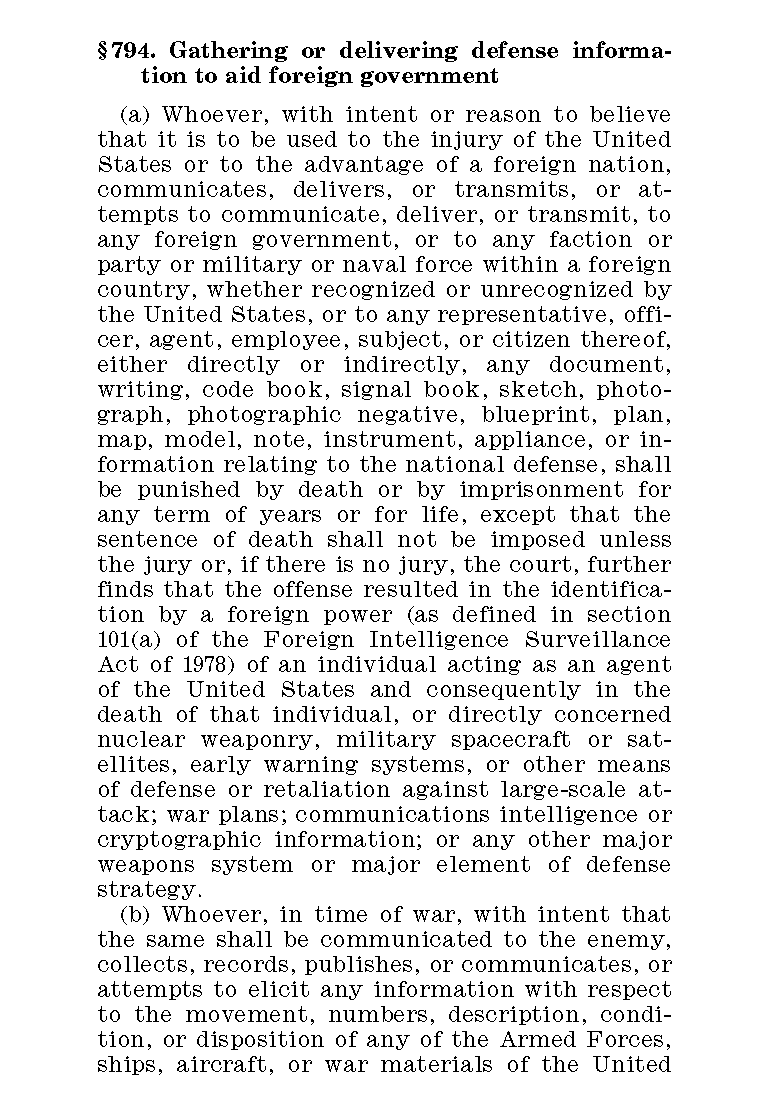
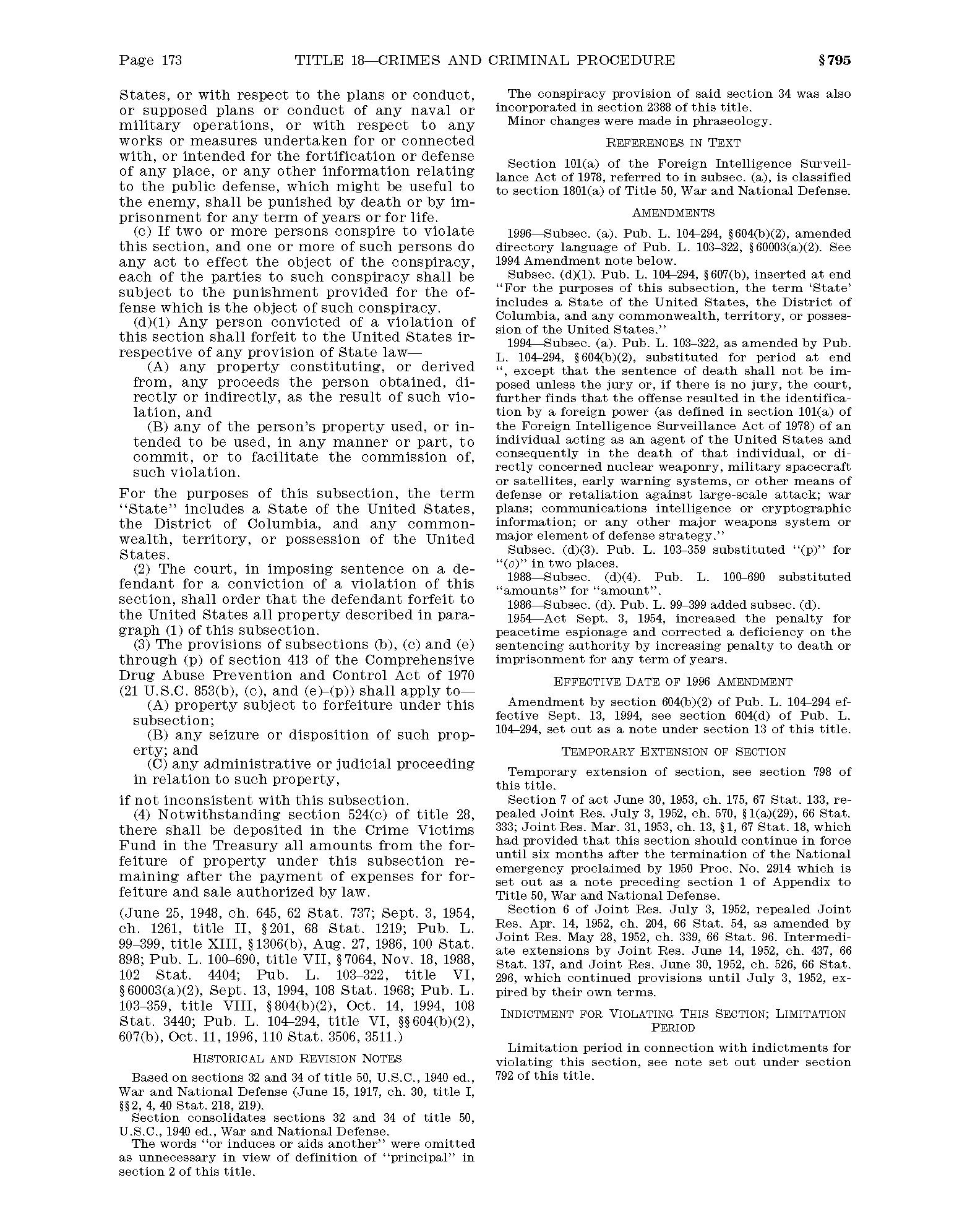
Nevertheless, within the body of statutes known collectively as the Espionage Act (18 U.S. Code, Chapter 37), there is a provision (18 U.S.C. § 794) under which a narrowly defined class of violations involving "national defense information" may be subject to capital punishment. Even here, however, the death penalty applies only upon specified findings, including that the offense directly concerned nuclear weaponry or other major defense systems, unless the broader wartime provisions are applicable.
Specifically, 18 U.S.C. § 794 covers gathering or delivering "national-defense information" to aid foreigners. To impose the death penalty, the jury or court must find that the offense either caused the death of an identified U.S. agent, or “directly concerned” one of several especially sensitive categories. Those categories include nuclear weaponry; military spacecraft or satellites; early-warning systems or other means of defense/retaliation against large-scale attack; war plans; communications intelligence or cryptographic information; or any major weapons system or major element of defense strategy.
For wartime, § 794 also separately covers information useful to the enemy about movement, numbers, description, condition, or disposition of U.S. armed forces, ships, aircraft, or war materials; plans or conduct of military/naval operations; fortifications or defense measures; or other public-defense information useful to the enemy.
Some people are under the impression that there could be UAP-related secrets classified as "Restricted Data" under the Atomic Energy Act. Under 42 U.S.C. § 2274, unauthorized communication of Restricted Data carries up to life imprisonment, if it is proved that the disclosure was intended to injure the United States or help a foreign nation. But even under those circumstances, § 2274 itself does not itself authorize capital punishment; Congress made the death penalty inapplicable to that section in 1969. [9]
Thus, in order for capital punishment to ever come into play, 18 U.S.C. § 794 would have to be invoked, and the specific elements described above would have to be satisfied, including the requirements applicable to communicating or attempting to communicate national-defense information to foreigners, or engaging in specified wartime activities with the intent that defense information be communicated to the enemy.
However, no one has explained how these requirements would fit into the narratives of any of the contemporary UFO-whistleblowers who believe or claim to believe that they are risking execution by talking about UAP secrets to Congress, agencies, or even the public. They and their amplifiers are either laboring under severe misunderstandings of the law and should be set straight, or they are engaged in grossly exaggerating and melodramatizing the risks to which they are exposed – a proclivity which some of them have repeatedly displayed in other respects.
DUE PROCESS OF LAW
Federal law requires the prosecution to give notice of intent to seek the death penalty and identify the aggravating factor or factors it proposes to prove. The government could invoke the Classified Information Procedures Act (CIPA), 18 U.S.C. App. 3, to protect classified details from public exposure by various means. But it is inconceivable that a such a trial would run its long course without the public becoming much more aware of the general nature of the "core secret" that the government had been trying to keep hidden, and probably more than a few details.
Under federal law, assuming the person charged pleads "not guilty," conviction would require a unanimous verdict by the 12-person jury. Even after conviction, a death sentence cannot be imposed unless the jury also unanimously recommends death, as opposed to life without release, or a lesser sentence. If there is no jury, the court performs that role, but the defendant has a right to a jury trial unless he waives that right.
Even postulating a hypothetical future administration completely hell-bent to conceal a hypothetical secret reverse-engineering program, this entire scenario is beyond far-fetched. Any potential "whistleblower" who claims to be seriously afraid that this will happen to him perhaps should not be taken very seriously from the get-go.
UFO "WHISTLEBLOWERS" AND "TREASON"
"And that is why not only did I get accused of committing treason, which is a lifetime statute of limitations with a death penalty…" – Dylan Borland, UFO "whistleblower," Weaponized Podcast, Episode 118, May 22, 2026.
[to Dylan Borland] "... holding over your head the possibility of prosecuting for treason, even if they couldn't convict you. We don't even know if that would be done in a public courtroom or behind the scenes. That's the kind of stuff that whistleblowers face when they come forward on this topic. And it's real. It's real." – George Knapp, TV broadcaster and author-storyteller, same occasion.
Treason is a word thrown around entirely too loosely nowadays, by keyboard-warriors on social media platforms, by persons holding high political offices, and sometimes by people telling tall tales about UFOs and aliens.
In the real world, none of the topics discussed in this article intersect with the laws pertaining to treason ("treason law").
Treason is the only crime whose elements are expressly defined in the Constitution.
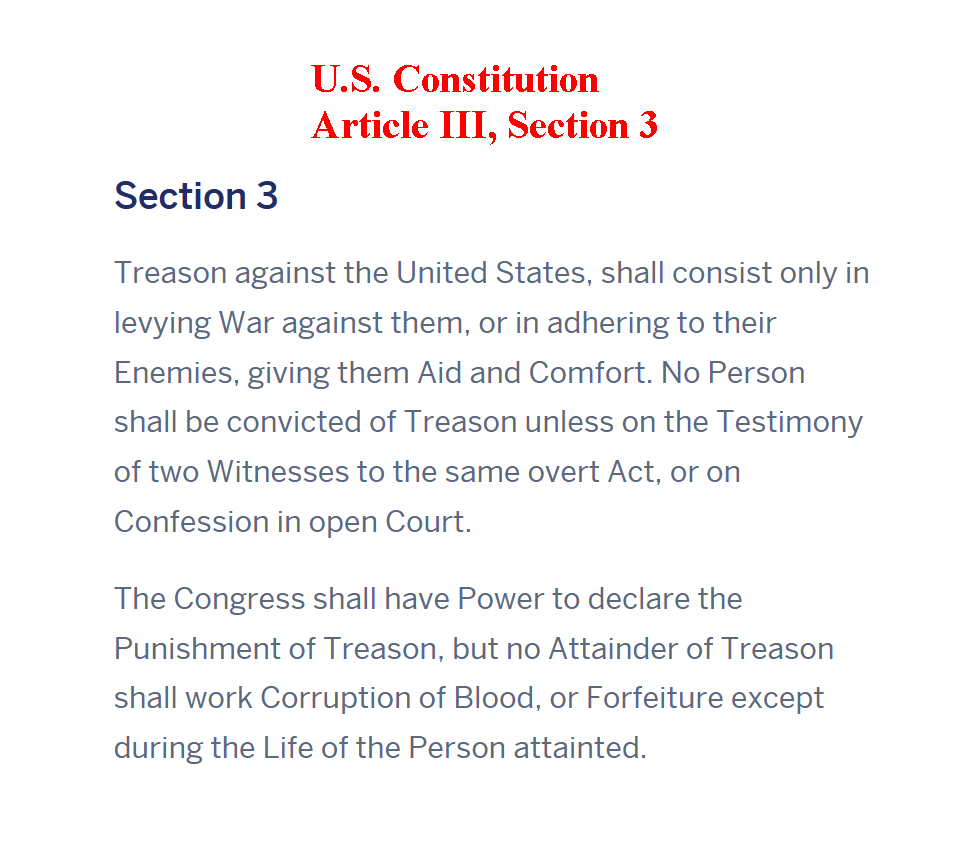
Federal statutes and Supreme Court precedents have been shaped within the parameters of that constitutional provision. Under modern treason law, treason means either (1) levying war against the United States, or (2) adhering to U.S. enemies by giving them aid and comfort. That is the language of 18 U.S.C. § 2381, shown below. The Department of Justice's Criminal Resource Manual summarizes it the same way: the treason statute “proscribes [Americans] levying war against the United States and giving comfort to the enemy.”
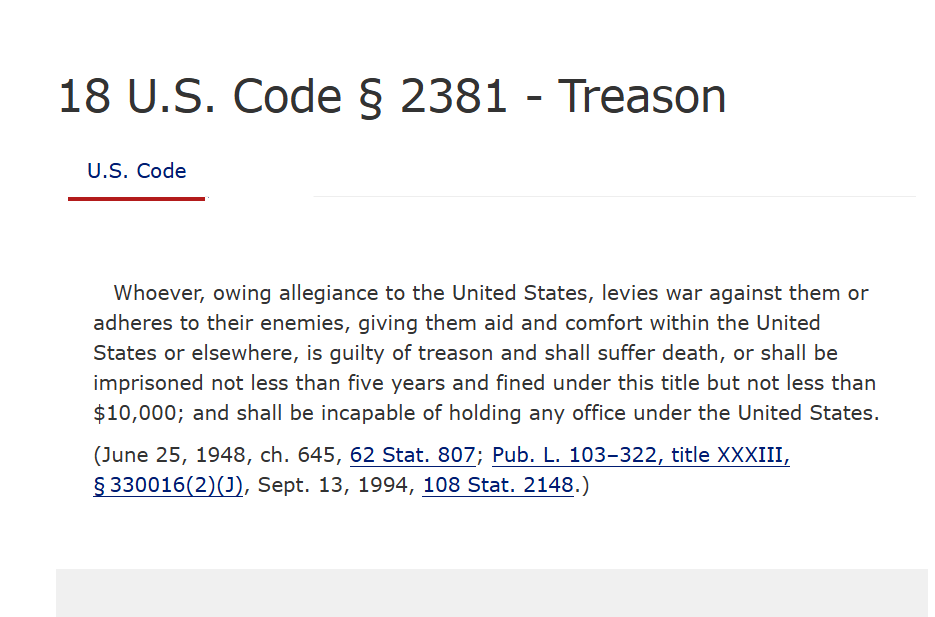
“Enemy” in treason law has been construed to mean adversaries in armed conflict, not merely adversarial governments or unfriendly actors. It has no application to most crimes involving the mishandling of classified information. The Rosenbergs in 1953 were not prosecuted for treason. Rather, they were convicted of conspiring to convey critical national defense secrets to the Soviet Union, but the U.S. was not at war with the Soviet Union, so there was no "treason."
Since the various treason cases that arose during World War II (including those resolved after the war), only a single new charge of treason has ever been brought by the U.S. government under 18 U.S.C. § 2381. In 2006, Adam Gadahn was indicted for treason and placed on the Most Wanted Terrorist list. Gadahn was never taken into custody because he was overseas assisting al Qaeda. He was killed by a drone strike in 2015. If he had been arrested, the Sixth Amendment would have guaranteed Gadahn the right to a public trial, contrary to George Knapp's suggestion that a UAP whistleblower's treason trial might occur "behind the scenes."
The last time anyone was actually executed for "treason" in the United States was during the Civil War. On April 26, 1862, a resident of New Orleans, William Bruce Mumford, a Confederate sympathizer, helped tear down a U.S. flag that Union naval forces had raised over the U.S. Mint in New Orleans. After Union Army Major General Benjamin Butler took military control of New Orleans, Mumford was arrested, convicted of treason by a military commission, and hanged on June 7, 1862.
It appears that nobody has ever, since the foundation of the Republic, been tried in an Article III federal court (civilian court) for treason, sentenced to death, and then actually executed. Some death sentences were handed down for conduct during World War II and earlier, all the way back to President George Washington, but nobody was ever actually executed for treason (excluding poor Mumford, who was executed for an act that under modern Supreme Court doctrine certainly would not have supported a treason charge).
Keep all this in mind the next time you hear somebody assert that UFO "whistleblowers" are at risk of being charged with and perhaps executed for "treason."
"YANKEE BLUE" AND SIMILAR PRACTICES
In discussing how some military officers came to believe that the government is running an ultra-secret alien-tech program, and that they would face the most dire consequences if they ever talk about it, it is necessary to consider the murky matter of "Yankee Blue."
According to interviews they gave in 2025 and 2026, Sean Kirkpatrick and Tim Phillips – the initial director and deputy director, respectively, of the Pentagon's All-domain Anomaly Resolution Office (AARO), while conducting a "historical review" mandated by Congress, learned that the Air Force had for decades widely engaged in a bizarre practice. It involved presenting newly minted intelligence officers with a classified briefing book describing and depicting an alien-technology program known as "Yankee Blue." Although the program was fictional, the material was presented in a serious fashion; each recipient was required to sign a non-disclosure agreement after reviewing the briefing book, which included photos of a couple of purported alien devices.
This practice was first reported in the Wall Street Journal in an article published on June 6, 2025, for which Kirkpatrick was clearly a major source.
Kirkpatrick further elaborated on the matter during an April 9, 2026 presentation to the National Capital Area Skeptics; the video of that segment of his talk is inserted below. After describing the parameters of the discovery, Kirkpatrick said, "This [the Air Force practice] is not the only one. There are several floating around. They've been doing this for maybe upwards of 30 years. ... And just to give you kind of the scope of what we're talking about here, that was not only in the Pentagon. Yankee Blue came from Central Command. There were many of these all around. They've been propagated all around."
Sean Kirkpatrick, PhD, who directed the Pentagon's All-domain Anomaly Resolution Office (AARO) in 2022-2023, spoke before the National Capitol Area Skeptics on April 9, 2026. In this six-minute clip he described discovery of the "Yankee Blue" fake-alien program.
On March 5, 2026, Kirkpatrick responded to some questions about "Yankee Blue" that I had put to him by email, in which he said that the whistleblower who brought Yankee Blue to AARO's attention referred to it as "hazing." Kirkpatrick himself characterized it as "immature and self-inflicted wounds and behaviors."
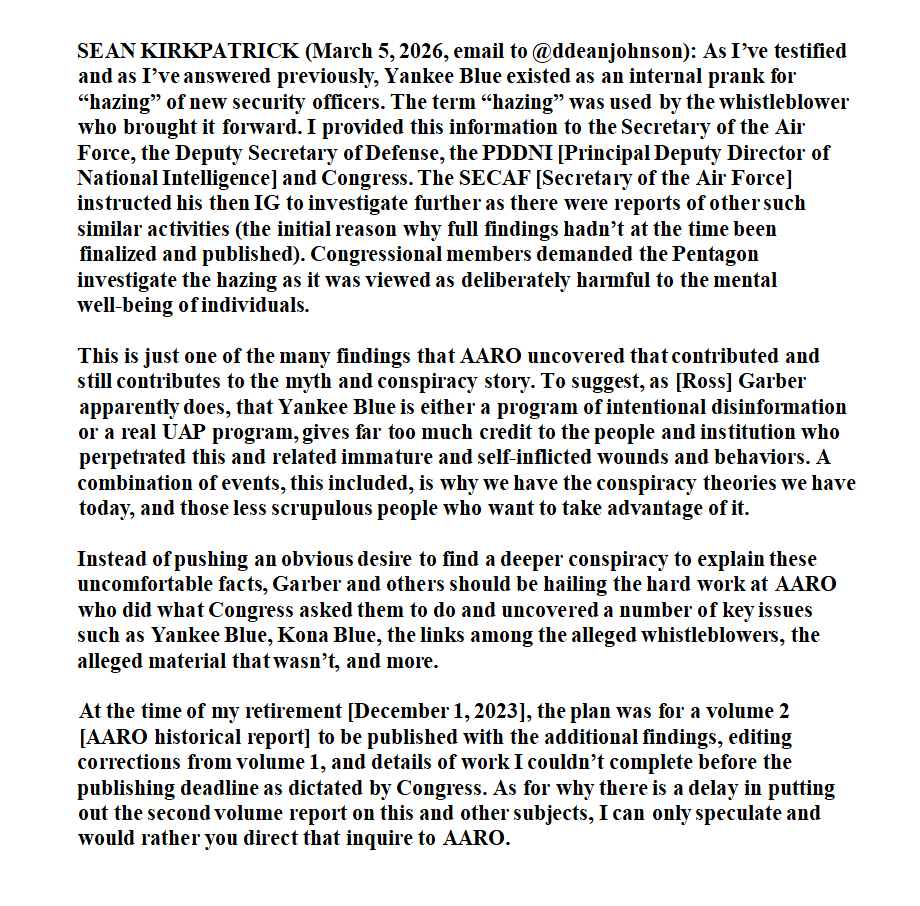
As I understand it, the Air Force was able to keep the Yankee Blue affair out of the first unclassified AARO "historical report," which became public in March 2024, ostensibly to allow time for the Air Force inspector general to investigate. However, volume 2 is now about two years overdue, without explanation from AARO or any other authority in the Trump Administration. On October 23, 2026, Rep. André Carson (D-IN) told a paper that the Administration had "slow walked" UAP disclosure, and called for immediate release of the long-delayed report.
The entire "Yankee Blue" narrative is still very controversial. We have yet to see a single government document validating the reports. Since the Wall Street Journal article appeared in mid-2025, various military components have responded to Freedom of Information Act (FOIA) requests about Yankee Blue, filed by John Greenewald, Jr. of TheBlackVault.com with letters saying that no responsive records have been found.
However, I expect that we eventually will see documentation confirming that generations of officers were exposed to purely fictional material purporting to describe and depict an alien reverse-engineering program, some of whom never figured out that they had been punked.
However, I am not aware of anyone who has suggested that "Yankee Blue" was responsible for all or even most claims that we hear nowadays alleging government-related possession of alien technology But it is one piece of the puzzle.
CONCLUSION
If any serious-minded chairman of any of the pertinent congressional committees or subcommittees really came to believe that there might be a group of people that thinks it has the right to assassinate people in order to prevent them from coming to Congress with valid information about UFOs or aliens (or anything else)--well, I have to think that would become an investigative priority, to put it mildly. In the mid-1970s, Senator Frank Church (D-ID) came into national prominence when leading a Senate investigation into various scandals involving the FBI and the CIA. Some of those scandals were very serious, but arguably not as grave as some of the allegations that have been presented to millions of Americans by Lue Elizondo, Jay Stratton, Dan Farah, and David Grusch, to name just a few.
What administration of any stripe could sit idle if presented with a credible allegation, or even actual evidence, of such a deadly conspiracy, operating completely outside of the law? The Justice Department of the current administration has not been reluctant to seek indictments even of former high-ranking federal officials. For example, on April 28, 2026, James B. Comey Jr., a former FBI director, was indicted for posting a photo of seashells in a certain pattern on a beach, which the indictment asserted "contained a threat to kill the President." Are we to believe that such vigilant guardians would hesitate to perp-walk the members of a government-connected gatekeeper-assassin cabal that had covertly murdered former military officers and others, and even perhaps threatened a president to prevent public disclosure of an alien presence? (See Out of the Shadows, by Jay Stratton, page 239.)
Perhaps a grand jury is meeting on this even as we speak, and will be issuing indictments any day.
But, very probably not. I know of no instance in which any investigative agency or prosecuting authority of any state or subdivision, or any federal law-enforcement agency, has ever issued a statement or taken an official action based on acceptance of a theory that an individual was killed, physically attacked, kidnapped, or credibly threatened with extrajudicial violence, in order to prevent disclosure of secrets related to UFOs; or any instance in which any federal or state prosecuting authority had pursued any criminal prosecution based on such an allegation.
So, the various "Legacy Program" narratives propose that a massive conspiracy exists that goes back for generations, eliminating potential blabbermouths along the way (including people who previously held high offices), but its machinations and agents have never run afoul of any of the multitudinous investigatory and prosecuting authorities within the United States. Truly, a most impressive exercise in concealment.
END NOTES
[1] Many of the widely circulated accounts of threats and retaliation against UAP "whistleblowers" have been based mostly or entirely on the verbal statements of the attestants themselves. These narratives should be regarded as a starting point. But organizations that advocate for "UAP transparency," such as The Sol Foundation and the Disclosure Foundation, ought to be insisting on transparency from day one on the part of people who come forward seeking UAP whistleblower status or the equivalent. This would include, for example, insisting on would-be whistleblowers signing releases allowing complete public release of military service records where applicable (with appropriate minimal redactions). Also, for all, waiving Privacy Act protections that otherwise prevent government documents directly pertinent to checking out their claims from being released. All records of pertinent past encounters with the criminal justice system should be publicly disclosed, and so too other records regarding past incidents that might bear substantially on credibility.
In short, if an organization (or a congressional committee) is going to advance someone to swear that high government officials have been running illegal UAP programs for decades, and maybe even assassinating people, then that individual ought first be to be subjected to at least the level of scrutiny that any assistant district attorney would apply before calling a prosecution witness in an embezzlement trial.
It is not enough that somebody has a story to tell that supports a theory, even a theory to which one is deeply attached. Some extraordinary claims publicly promoted by leaders of the prominent "disclosure" groups were revealed as fatally defective when subjected to a modicum of critical investigation by independent researchers or journalists. Leaders of organizations that seek credibility should emphatically and publicly repudiate previous endorsements of story-tellers caught in substantial lies, but this has not happened to date. On the other hand, see also the observations found in End Note No. 3.
[2] Some of the UAP whistleblowers have spoken in testimony and on podcasts regarding their actions in submitting claims to inspectors general, law enforcement agencies, AARO, and courts, but few have been forthcoming in sharing the full end products of the ensuing inquiries. Regarding the outcomes of independent inquiries, what has come into the public domain mostly has not been through voluntary disclosures by the claimants or the "disclosure" organizations, nor through reports flowing from any congressional investigations properly so called, but piecemeal through independent, time-consuming Freedom of Information Act (FOIA) requests and other forms of investigatory journalism. Notably, when authoritative documents do come to light through FOIA or other means, they have on multiple occasions conflicted with the widely disseminated narratives of certain prominent story tellers. Perhaps this is one reason why most of the current array of publicly identified UAP "whistleblowers" assiduously avoid any public venue in which they would be subjected to sustained lines of questioning from well-informed persons who are not already cheerleaders.
[3] The Sol Foundation briefing paper speaks not only of credible threats to personal safety, but also of what it believes to be multiple forms of retaliation that have been directed against those identified as UAP whistleblowers, including "fabricated or highly exaggerated allegations of security violations, leading to indefinite clearance investigations or revocations," "manufactured claims of misconduct or poor performance," "marginalization, and hostility within work environments," and "sudden revisions to government requirements for employment that eliminate their positions," among others. I am by no means dismissive of claims that such things may have occurred in the past or may be occurring now. Reports of and appropriate remedies for various forms of unlawful suasion or retaliation are an important subject, but these are matters far different in kind from allegations that whistleblowers may place themselves at risk of death, which is the focus of this article. I support directives recently issued by various authorities within the Trump Administration to facilitate orderly UAP-related disclosures by current or past federal employees and contractors, and I support very vigorous remedial measures with respect to any civilian or military personnel who obstruct the Administration's stated "UAP transparency" campaign.
[4] The main thrust of The Sol Foundation briefing paper is this: "To mitigate the risks of financial ruin and professional hardship and to encourage
whistleblowing, Congress should establish a 'UAP Whistleblower Restitution Fund.' Such a fund would serve as a rapid, assured mechanism to compensate individuals for lost wages and expenses as well as incentivize additional whistleblowers to come forward." Detailed discussion of the merits of such a fund is outside the scope of this article. Suffice to say here that I think it is a bad idea to create additional financial incentives for people to come forward who lack documentary or forensic evidence of their claims. We have already more than a few attestants who clearly relish the spotlight, are non-transparent when not outright deceptive even with respect to their own backgrounds, make questionable claims that difficulties they experienced with previous employers were reprisals for their boldness on UAP matters, can provide no real documentation for their claims, and lead sympathetic investigators into dead ends.
[5] See the presentation by attorney Hunt Willis on behalf of the Disclosure Foundation to the UAP Science Advisory Council, "National security information and the PURSUE Initiative," September 29, 2026.
[6] Because 18 U.S.C. § 794 can be employed to protect nuclear secrets (as one type of national-defense information specifically mentioned in the provision), some security materials utilized by the Department of Energy do say, accurately, that violations may be punishable by death or imprisonment (but again, this is true only if the circumstances also fit within the other specific criteria already summarized). As an example, I have inserted below a page from a Department of Energy "security termination briefing" packet that is or has been used at the Sandia National Laboratories. It lists 18 U.S.C. § 794 in summary form, noting that violations of that statute are punishable “by death or by imprisonment for any term of years or for life.”
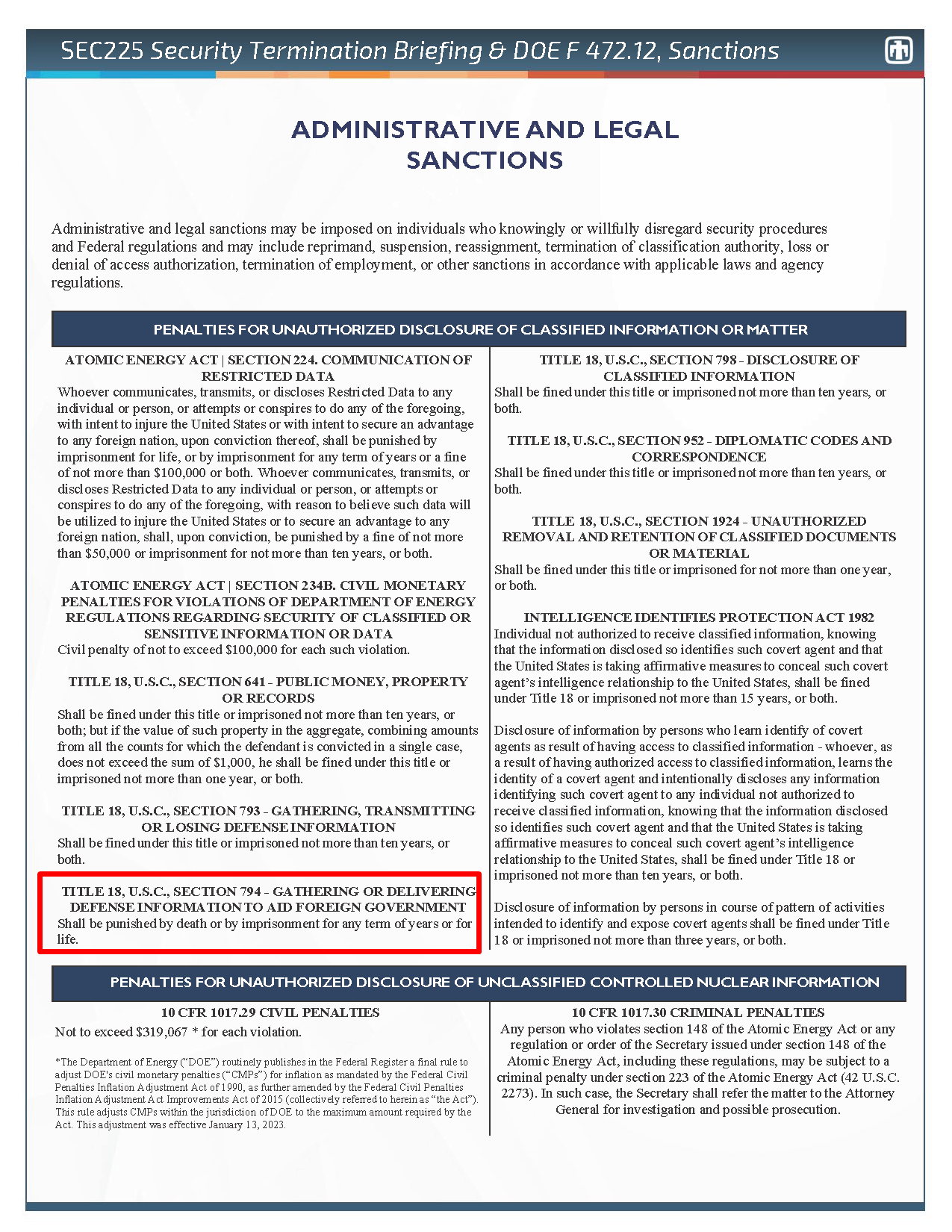
The entire Sandia National Laboratories security termination packet PDF is embedded below.
[7] A policy briefing available from the Disclosure Foundation, titled Disclosure to Congress of Classified UAP Information (Policy Brief No. 4), by Kirk McConnell, Christopher K. Mellon, and Hunt Willis, published July 30, 2025, asserts, "To our knowledge, no person has ever been charged and prosecuted, let alone convicted, or even sued in a civil capacity by the executive branch for disclosing classified information to Congress in a nonpublic, secure setting." See also Willis' presentation on behalf of the Disclosure Foundation to the UAP Science Advisory Council, "National security information and the PURSUE Initiative," September 29, 2026.
[8] Brian Patrick Regan was a retired Air Force master sergeant who, after leaving active duty, worked as a TRW civilian contractor at the National Reconnaissance Office. He was indicted on February 14, 2002, charged with three counts of attempted espionage under 18 U.S.C. § 794(a) and one count under § 793. On April 19, 2002, the government formally filed a notice of intent to seek the death penalty under the Federal Death Penalty Act. The notice sought death on Counts 1 and 2: attempted espionage intended to injure the United States and advantage Iraq and Libya. Regan was convicted of offering to sell intelligence to Iraq and China, but the jury spared him the death penalty. It was reported that the jury determined that Regan had not offered Iraq documents concerning nuclear weaponry, military satellites, war plans, or other major U.S. weapons systems; he received life imprisonment instead.
[9] Anyone who wishes to gain a better understanding of the history of restrictions on information about nuclear weapons will find no better introduction than the excellent Restricted Data: The History of Nuclear Secrecy in the United States, by Alex Wellerstein (University of Chicago Press, 2021).